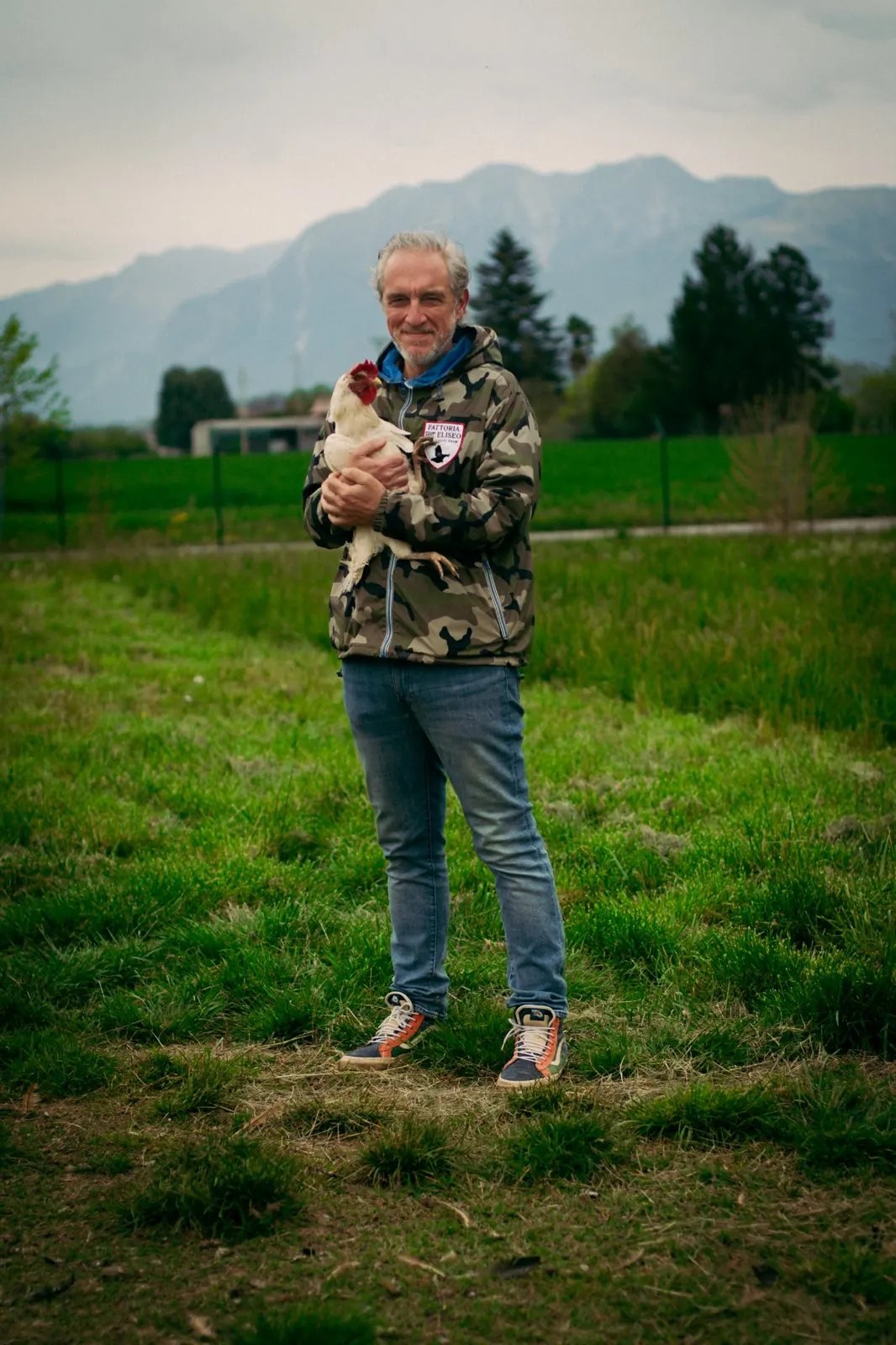
Daniele Riva raises chickens in Majano, in the Friulian plain that gently rises toward the Carnic pre-Alps. His farm bears the name of a saint—Sant’Eliseo—and has the unhurried rhythm of someone who is in no rush to get anywhere except here, in this place, with these animals.
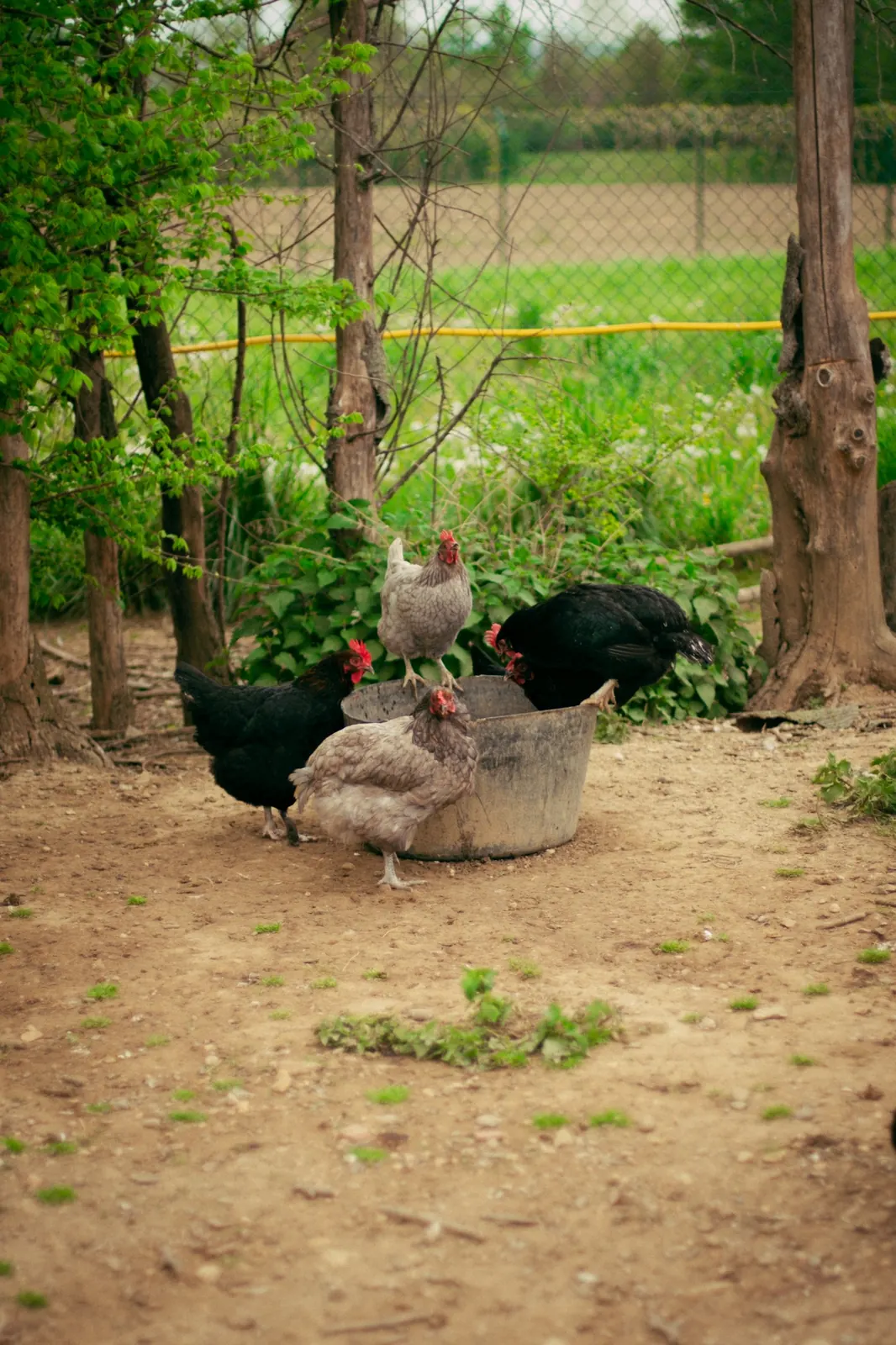
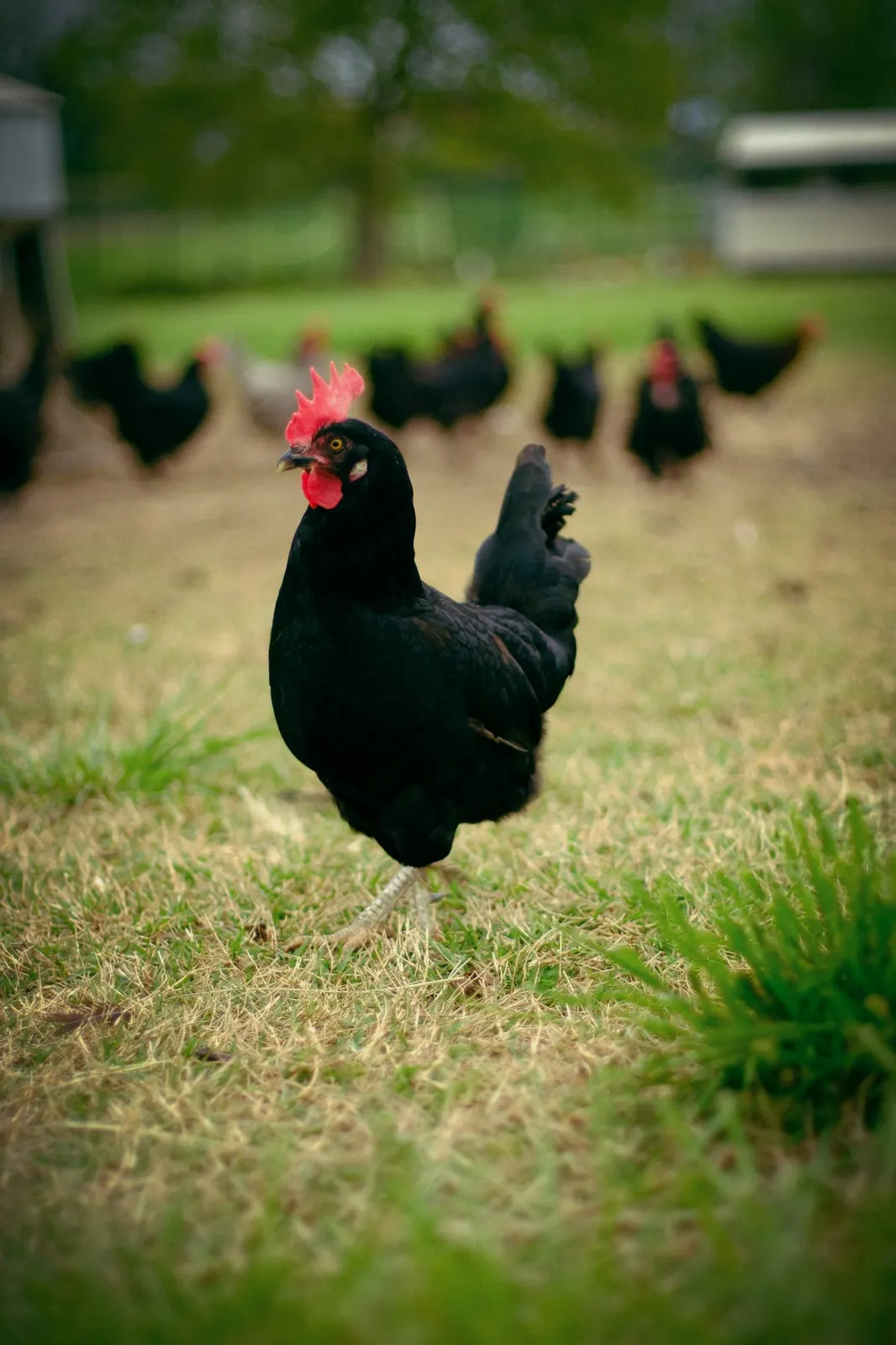
The eggs from Sant’Eliseo Farm are called rainbow eggs: each hen, of a different breed, lays an egg of a different color—white, beige, cream, pink, green, blue. This is not marketing; it is the natural consequence of choosing biodiversity over uniformity. Ancient breeds, often forgotten by industrial farming, which Daniele has chosen to recover and keep alive. The hens live outdoors, move freely, scratch around, behave like chickens. This seems obvious but it is not: in most intensive farms, the natural behavior of the animal is systematically suppressed for reasons of productive efficiency. Here, efficiency is measured differently—in the quality of the yolk, in the flavor of an egg that still tastes of something.
Daniele did not arrive at this through family tradition. In 2014, he was working as a manager in a debt collection company when he met the father of a friend of his daughter, who was dismantling an old chicken coop. He took that micro-coop without knowing what to do with it, bought his first laying hens, and began to study. When he discovered that eggs with colored shells existed, he says, he literally lost his mind: he began to populate his home garden with the strangest and most unusual chickens from all over the world. Today he is known on social media as The Unconventional Farmer. That is when everything changed—and gradually he understood that this could become his work.
Some of the hens he raises belong to breeds that the modern production system has abandoned because they are not uniform enough, not fast enough, not profitable enough. But they are breeds adapted to this territory, resistant, healthy, carriers of traits that industrial breeds have lost. Keeping them alive is not a sentimental choice: it is the only way not to lose a biodiversity that, once gone, cannot be recovered.
The relationship with the rhythms of nature is one of the things Daniele has learned to accept without compromise. In autumn, the hens lay fewer eggs—it is normal, it is physiological, it is the response to decreasing light. He does not use artificial lights to trick the natural cycle: in autumn and winter he has fewer eggs, and those who cannot wait go elsewhere. He has learned to be at peace with this as well. When he opens the coop in the morning and the hens rush out—the way they dash outside, scatter across the meadow, immediately start scratching—for him, that is everything. An animal that wants to go out is an animal that is doing well.
What he would like those who buy his eggs to understand is simple: that egg is the result of a double choice—his and that of the buyer. When you crack open a rainbow egg and see that intense orange yolk, you are seeing a hen that has eaten well, that has moved, that has lived. That color does not lie. It is the signature of an animal that was doing well.