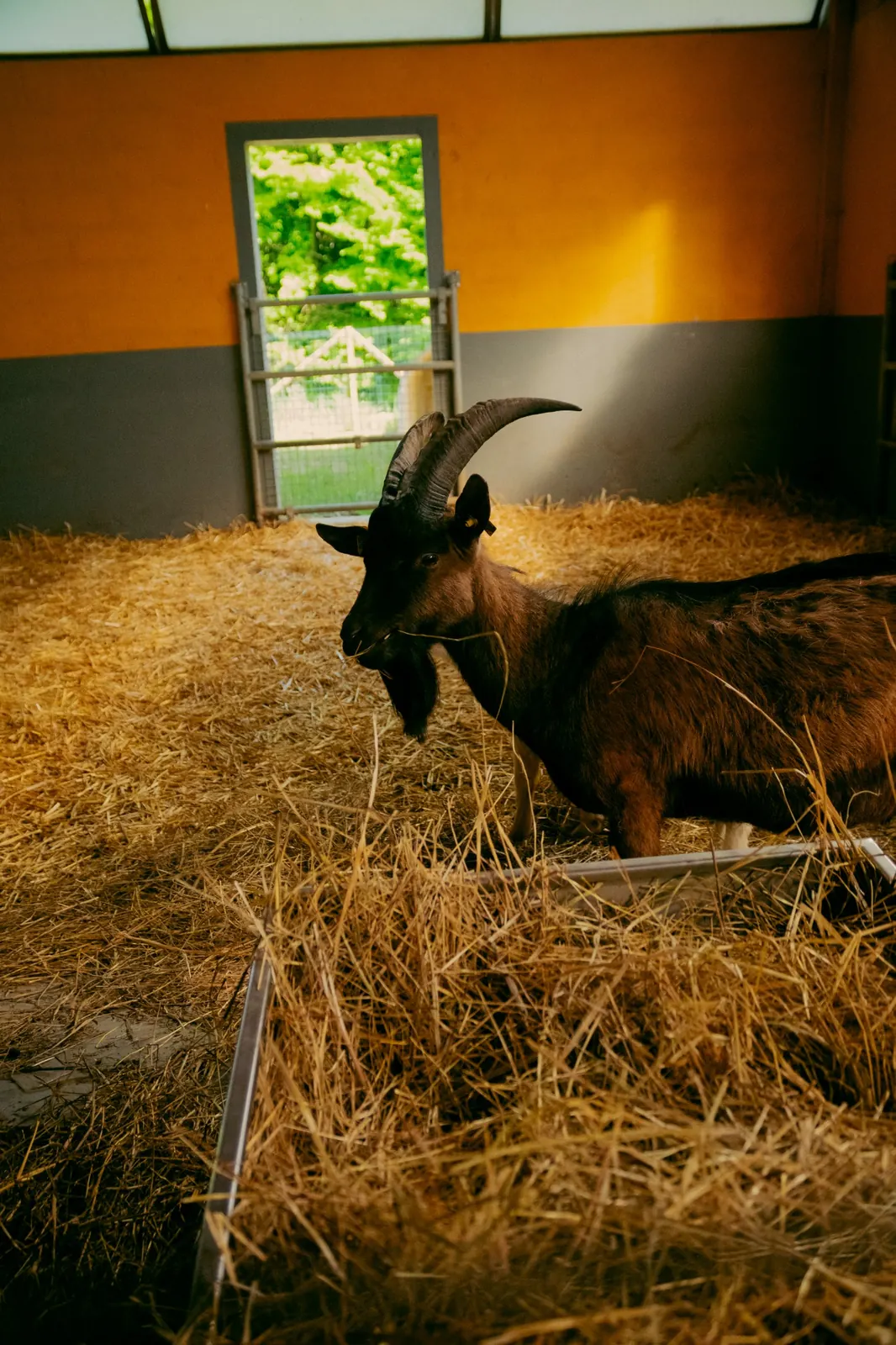
Alessia Moschioni and Matteo Costa Pelliciari chose Cividale del Friuli as the place to build something different. L’Asan e La Mussa is a farm that raises goats and donkeys with a philosophy that places animal welfare at its core as a necessary condition, not as an added value. The name itself tells much: asan is donkey in Friulian, mussa is female donkey. Two animals that farming culture has always associated with hard work, patience, and stubbornness. Here those animals do not work—they live, and by living they produce milk.
The farm’s story begins with an encounter: Alessia and Matteo were brought together by their shared passion for animals. For all animals. Together they decided to restore a dilapidated structure built by Alessia’s grandfather in Gagliano di Cividale, near the Slovenian border. They opened it in 2016, transforming that passion into a sustainable agricultural project, far from the intensive practices of the past.
Goat and donkey milk have very different characteristics—composition, digestibility, aromatic profile—and both are transformed into cheeses using artisanal techniques that respect the specific qualities of each milk. The result is products with a strong, recognizable personality, impossible to standardize. Respecting the rhythms of nature, the donkey has a very slow growth: Alessia and Matteo wait at least three years before the animal becomes sufficiently mature for breeding. Only in this way is the product truly ethical and of the highest quality.
The animal they care for is the Ragusano donkey, an endangered breed that now numbers only one thousand heads in total. Here the donkeys return to doing what they were born for: being guardians of the environment. Thanks to their frugality, they are natural cleaners that reclaim the small patches of Friulian land where large machinery cannot enter. By clearing the undergrowth of brambles and invasive species, they prevent summer fires and protect a fragile territory that would be lost without them. Mother and foal remain together as long as needed, because only in this way does the donkey give her milk—a matter of respect even before production.
The confirmation that they are on the right path, they say, does not come from numbers but from people’s words. When someone stops them on the street and says “I remember you well, I saw you passing with the animals,” they understand that their presence is creating a new awareness. In that milk and those cheeses there are ten years of life, shared passion, and dedication to animals and the land. It is not a matter of appearance, but of substance.